Showing posts with label St. Francis of Assisi. Show all posts

15 November 2011

A Mended and Broken Heart

Biographies have always been a favorite genre of mine. Learning about a person's childhood, their joys and sorrows, what motivated them and the crosses they bore through life always interested me. Buffett: The Making of an American Capitalist, Titan: The Life of John D. Rockefeller, Sr., and Iacocca are some of my favorites. I have G.K. Chesterton's St. Francis of Assisi and Saint Thomas Aquinas: The Dumb Ox along with Thomas Merton's Seven Storey Mountain on my reading list -- they've been there a while :) I will say, Chesteron being one of my favorite writers, I'm looking forward to reading both of those since Sts. Francis and Dominic demonstrate contrasting paths to holiness.

Of course, the challenge to a biographer writing on someone like St. Francis is bringing something new to the table. That's why I almost didn't bother buying this book, A Mended and Broken Heart: The Life and Love of Francis of Assisi by Wendy Morgan, especially since the inside-cover description makes the book sound slanted against orthodoxy. For instance, there's reference to St. Francis' "complex theology," the repression of certain details of his life by the Church, and his rushed canonization two years after his death (calling to mind the relatively quick canonizations of Blessed Teresa of Calcutta and Blessed John Paull II). Yet it also offered a quote I'd never heard before: "Don't be too quick to canonize me. I am perfectly capable of fathering a child." And from there, proceeds to mention the "crucial but completely neglected role that Clare of Assisi played in Francis' life and theology, both before and after his conversion." Maybe Francis had a little thing for Clare, eh?

I could see that.

At any rate, I firmly believe we must die to become saints. Francis-the-sinner glorifies God all the more in becoming Francis-the-saint, and since I have a certain penchant for film noir and the dark side of humanity, I look forward to learning about Francis from a perspective that intentionally sheds more light on his weaknesses. Our sins show the way to holiness in that they reveal (in a disordered way) truth about ourselves that we can easily miss simply because we only see the sin and never look deeper into what it is we are fundamentally attracted to and how the seed of goodness within can be nurtured from depravity and death into goodness and life.

I won't be able to start this one right away. I'm finishing The Princess and the Goblin and just started Brew Like a Monk while in the middle of Screwtape Letters, The Call of the Wild and White Fang, and In Business As in Life, You Don't Get What You Deserve, You Get What You Negotiate. Needless to say, my interests are varied... and I should get some Amazon credit for all these links!

04 July 2011

The Prodigal Son

Two years, three months, and eight days since my last blog post. Yet every once in a while someone still happens across this place and leaves a comment. Every time I received one those e-mails, part of me missed this little outlet for semi-anonymous self-reflection and sharing, and figured eventually the time would be right to return. Like the Prodigal Son, I've done my share of wallowing in the mud and drinking from cisterns that do not satisfy one's inner thirst. And like him and St. Francis, I finally came around to embracing my Father in a new and refreshing way.

While I never left the Church, at times serving Mass was nothing more than a chore to keep my body occupied while my mind questioned the existence of God. Much of the time God so graciously gave me was given over to withdrawing into a paralyzing inner isolation, asking all the big life questions, intimidated to look inside my soul... not seeing much there and vainly grabbing onto any experience that distract me from the real work at hand... like walking into a mess that you have no idea how to begin cleaning... so you procrastinate with meaningless tasks... until you finally do one small thing to make it right that leads to doing another bigger thing...

Thankfully that mess is (mostly) cleaned up... I've done a healthy bit of introspection recently, especially when I noticed that the past five years were blurring together. Plus, watching the current Terrence Malick film, "Tree of Life," spurred me into facing some demons once again, which hasn't been fun, but it is necessary if they'll ever be put to rest.

I reckon that's about all for now... after seeing "Tree of Life" again, it'll definitely be post-worthy material.

04 May 2008

Messin' round

Been messin' round with the old blog, thinking about getting back into the habit of blogging on some kind of regular basis. For now, I just wanted to get my feet wet foolin' around with some photo editing on this MacBook I purchased from Apple's refurb store back in March. I got some cool stickers on the back to help my plain white Mac stand out from the other Macs with the cool kids down at the coffee shop. No problems with bullying so far.

Pixelmator convinced me to pay them some money. I'm sure they deserve it, but I'm sure feeling broke these days. I've only driven to work two days in each of the last two weeks. That trend looks to be more like five days a week, what with gas prices and all.

Hence, I get to be really cool with my new goatee strollin' into the coffee shop around 7:30am on my way to the bus stop. Okay, half the time I'm running like a goofball to cross a busy street at 8:02 before the bus pulls up at 8:03. I don't look so cool then.

I guess all this should somehow tie into Franciscanism. Hmm... that's gonna be a stretch. Francis definitely did not hang out at coffee shops... not post-conversion, anyway. G.K. Chesterton? I think he would.

Which is an interesting place to arrive and quit my rambling for now. Seems I love the Franciscan ideal of poverty, forsaking every material comfort and possession for the love of God. Yet I also have some Chesterton in my veins that longs to enjoy cool evenings on the front porch sippin' a dark homebrew and puffin' a pipe. Or sippin' a cappuccino with the cool coffee shop kids while an indie acoustic song enlightens our eardrums.

I like to think that an Incarnate God affirms both ways of finding Him. Long as we trust God and recognize His Goodness is all good things, maybe the only real sin is sippin' Pabst Blue Ribbon while puffin' a Swisher Sweet. 

14 October 2007

Imitation of Christ


Started reading Thomas A'Kempis' Imitation of Christ while taking a trip along the West Coast to San Francisco, Portland area, and Seattle. Visited the Shrine to St. Francis while in San Fran, which I guess isn't all that big deal compared to, say, going to Assisi, but was glad to see they seem to have a good, faithful ministry there. Also talked to a hippie in Buena Vista Park near Haight-Ashbury. That was probably the highlight of the whole trip. Afterwards, I kinda wondered what Jesus might have said during that conversation, which I guess is a cheesy WWJD-ish thought to have, so I didn't waste time thinking about it for too long because -- obviously -- Jesus wasn't there in human flesh and blood.

Anyway, back to the point of this post, which is gonna be quick since I'm thinking shorter posts are better suited to my writing and reading style. Maybe a few people will actually read this thing if the posts are short :)

I keep going back to this one line in Imitation from Book I Chapter XI: "If every year we would root out one vice, we should soon become perfect men." Obviously, he's not saying we'll cease to be sinners, but our imitation of Christ will approach perfection by God's grace. I find this convicting because this past New Year's, I made an honest-to-God resolution to cut Sloth and procrastination out of my life. How am I doing? Well, I keep putting it off. This year is nearly over and I don't want to make the same resolution again next year.

See, I often think up ambitious ideas for a small business I could start or some creative evangelistic effort, but I suck at taking the smaller practical steps to get from Point A to Point B. Usually those aren't so exciting to think about. Relating it to St. Francis' life, he didn't set out to create a religious order that would remain one of the world's largest 800 years later while producing some of the Church's most beloved saints. He simply longed to love Jesus in a leper and to adore Him in the Eucharist.

28 August 2007

I don't watch a whole lot of TV... a little bit of "The Office" and I catch "Family Guy" or "Letterman" once in a while, and while I'd love to watch my Chicago Cubs, I'm not too keen on paying for cable just for that. Fortunately, the one show I definitely gotta see is on network television: "Lost"! While waiting until Season 4 begins to air in February 2008, I'm getting my fix by re-watching Seasons 1 and 2 on DVD. It's been so long since I saw these episodes, I've forgotten a lot of things. That's why I'm taking notes... yeah... not that I'm going to figure out any big mysteries, but the show has some interesting themes and plot elements, and some are quite spiritual. While one of the writers is Jewish and I don't think the other is Christian, they seem to like drawing in Catholicism with confessional scenes (Charlie and Mr. Eko), references to saints (Kate chose St. Lucy for Confirmation), and even Mr. Eko playing priest to escape his home country.

And then there's this John Locke character. Off the island, he's disrespected and alone, out of place at his collar-and-tie office job. On the island, he's "the hunter," a master at following tracks through dense forests, throwing knives with scary precision, and a man of faith. Not Christian faith, but a believer in fate and knowing there's a reason for the things that happen to us. He lives in this strange communion with the Island. He seems to follow some unseen force -- at times getting lost -- until realizing he was a fool to lose faith.


St. Francis seemed to be a lot like that. While he did benefit from notable miraculous encounters, especially hearing Jesus' words from the San Damiano crucifix, most of the time Francis was just trying to figure out the next step to take -- and even after receiving his marching instructions, "Rebuild my Church," he initially misinterpreted the meaning. See, even though Francis wanted to be a knight, I don't think his heart was in fighting military battles. I think he knew there was something else for him, but volunteering for a Crusade was the closest thing he could find to whatever "it" was. When he jumped off his horse to embrace a diseased leper, he certainly wasn't following any direct command from God -- he must've had that distinct feeling in his gut saying, "I don't know why, but I have to do this." Surely he had passed other lepers and felt drawn to jump down and embrace them, but this time the impulse couldn't be ignored. He was following a greater, unseen force -- what greater adventure is there?

Maybe that's part of the reason Locke seems like such a manly, adventuresome guy on the Island. Sure, throwing knives and tracking through the forest is cool, but he's clearly driven by a greater force. Sometimes I relate to that feeling, when I find myself make a decision not because it really makes sense at the time, but because it feels like the right thing to do at that time. I had that feeling about getting into a dating relationship last year, even though I felt so strongly about pursuing the priesthood. Of course, the relationship fell through (as it was destined to do because we weren't very compatible) and life sucked for a while, but there's something about opening your heart to another person (not just in dating, but also friendships) that reveals your deeper needs and motivations.

Having been through a bit of an emotional roller coaster throughout the past year, now I have that same gut feeling about beginning the application process for seminary. I don't know if I'll eventually end up ordained or married, but when St. Francis had his dream of becoming a knight in the king's court, or heard Jesus' voice from the crucifix, or wrapped his arms around that leper, he didn't know much more than I do now. Ain't nothing wrong with that... besides, where's the adventure in knowing exactly where you're going?

16 February 2007

Vine and Branches; Love and Eucharist

A few weeks ago I read through the Gospel of John, which I chose because of how John referred to himself as "the disciple whom Jesus loved" and, since I think part of the reason he might have done that is because all Christians are disciples loved by Jesus, I was curious how those passages might relate if I put myself in John's shoes. Naturally, as to be expected with reading the Bible, God showed me more and different things than I originally went looking for.

One passage that got I kept pondering was the "I am the vine; you are the branches" narrative. It is symbolic, is it as symbolic as I was taught during my Evangelical days? Branches are physically, organically connected to the vine, so that the same substance which makes the vine a vine and keeps it alive also makes a branch a branch and keeps it alive. The very name Christian suggest this because it comes from the Greek for "little Christ" -- not "like Christ" or "Christ follower" -- but distinct members of Christ Himself. And as members of Christ, just like the branch receives physical nourisment from the vine, we receive from our spiritual vine the physical nourishment of the Eucharist. Of course, it's no magic potion, but when we receive the sacrament of Reconiliation regularly with contrite hearts, we become more open to Him as He nourishes us through Holy Communion. Then we will bear much fruit and anything we ask will be given unto us. And as "little Christs," the only thing our hearts will ultimately desire (above all else) is to bear more fruit for our Father, storing up riches in Heaven.

Furthermore, it sounds cliche, but it wasn't too cliche to become the title of Pope Benedict XVI's first encyclical: God is Love. That's Love with a capital L, the source of all love. Love is a unifying and creative force: just look at the universe, created out of God's Trinitiarian Love, and how the constant laws of physics bind it all together. And since Jesus is God made flesh, then Jesus is, in fact, Love made flesh. What an awesome gift that this abstract idea or principle we simply call "love" was made tangible before our own eyes! How much we struggle to describe what love is, how many wrong places we search for it, and how many poor examples of it we see in the world and in pop culture, while Jesus patiently waits for us to discover that He is Love! Going one more step with this line of logic, God is Love and Jesus is Love made flesh, so that means the Eucharist, being the very substance of Christ's Body and Blood, is also Love made flesh! Just think, every Sunday at Mass we receive a physical remembrance of Love. It may not manifest itself in the lives of the people we see at Mass, but Divine Love does not withdraw itself just because it is rejected. God loves us like a a young couple experiencing a mutual first love: He doesn't hold back His affection for fear of rejection.

Going beyond all the theology and apologetics behind why we Catholics believe in Transubstantiation, I find the reason to be quite simple. Look at how couples separated by war or a job requiring lots of travelling long to be physically together. If this love is merely a reflection of Divine Love, how much more so much God long to be physically united with His beloved? He couldn't stand to give us mere symbols of His Body and Blood; He loves us too much for that!

Taking this train on down the line to the next stop, what is the the parallel to marriage? For one, God designed men and women to a love that reflects the Love of the Trinity. Marital love, in its pure essence, is a powerfully creative and unifying force. There is no room for selfishness where one spouse completely gives themselves to the other, just as there is no room for sin when we completely give ourselves to God. And just as Love is made flesh in Christ, so the love between husband and wife is made flesh in children. And that love is given a name, just like God named our earthly father, Adam, and our spiritual Father, Jesus, the Christ, the Anointed One. When we are seeking a sign of Love, we can look to the Holy Eucharist just like a married couples looks to their children.

All of creation is a reflection of Love, a reflection of its Creator. Adam and Eve were made as the highest order of creation, the ultimate manifestation of Love. This same Love, shared among Father, Son, and Holy Spirit, is reflect by each and every human being. In that sense, though we are a fallen and broken race, we are all Love made flesh. Perhaps this is what struck St. Francis when he lept from his horse to embrace that leper. Christ had truly embraced the spiritual ugliness that had crippled him; in return, St. Francis embraced the physical ugliness brought into this world by the same Fall which leaves many physically crippled. That is Love manifest through action and it is why we are given the Eucharist, Love made flesh.

19 January 2007

To Mary Through Jesus

Today I had lunch with a couple of guys I knew during college who were involved in some of the other Christian ministries on campus. Naturally, the conversation came around to women and dating. One guy is engaged and the other is in a semi-serious relationship. Then they asked about me, "So are you dating anyone?"

Off the cuff, I immediately replied, "Yeah, her name's Mary."

"Cool." Then I started smilin' because I know he doesn't know what I really mean, so he says, "Are you serious?"

"Yeah, completely serious," still smiling.

"How'd you meet her?" I never thought about how I would answer that question, but my instinctive answer was perfect:

"Through Jesus."

Which got me to thinking... Catholics are known for that cliched term, "To Jesus Through Mary," but my walk with God has been more like, "To Mary Through Jesus."

For one, I was raised in a Christian household and have always been a Christian, so I was already "to Jesus." Mary, however, began to mystify me around the time I was learning to study the Bible during my InterVarsity years. All these great Old Testament men... Abraham, Moses, King David, Jonah... they fought futilely against God's insistent tapping on their shoulder... they ran from Him... and they sinned greviously.

Mary simply submitted. She asked one simple, practical question of Gabriel and submitted. Luke notes that she treasured all these words and pondered them in her heart when the shepherds visited the Nativity scene and after finding Jesus in his Father's house, Luke again mentions she treasured all these things in her heart. Simeon prophesied to her that a sword will pierce your own soul too. And her last recorded words in Scripture, Do whatever he tells you, even in defiance to our Lord's wishes, brought about the first miracle by Jesus and the manifestation of his glory. And then there's that woman clothed with the sun in Revelation 12.

These Scriptures hint at something deeper and more mysterious than a simple mother-son relationship. Nothing within the Protestant traditions seemed to satisfy the deeper mystery behind Mary, but the true joy and love I felt among Catholics and the simple sense of peace and fulfillment I experienced at Mass piqued my curiousity. It took four or five years, but Jesus patiently lead me to His mother through His Word... and she brought me to the foot of the cross, where I've recently found myself transfixed in meditation upon the crucifix and what it means to follow Christ and love God sacrificially.

That's why Archbishop Fulton Sheen's quote above hits home right now. After all, it was while kneeling at the foot of the cross that St. Francis of Assisi heard Jesus' command, "Go, rebuild my Church!"

And so this leads me to tonight and the reason I'm staying up way too late to write this blog post. I don't care if anyone reads it because I primarily need this to create a virtual memorial. Earlier tonight at a Mass celebrated in preparation for this Ignite Your Torch youth conference coming up this summer, and the priest's invited us to consecrate our lives to Mary so that she can place us at the foot of the cross. During the Offertory, I offered myself to Mary. The idea sounds easy, but when you actually try and pray those words you run smack into your own Pride. This is, after all, a complete abandonment. In doing this, I believe that Mary knows better about what will bring me joy that I do. After three tries, I finally made it past the opening, "Mary." And after sealing the deal, I felt at peace, excited, joyful, and scared all at the same time. But all of that is better than being bored with life, refusing to discover the purpose for which God created you.

Not to say that I won't resist God's tapping on my shoulder in the future -- I definitely will, if only because I know God is calling me to the one mission for which He created me. Part of me wants to live pointlessly for a little while, but there's no joy in that. At the risk of presumptuousness, it's very likely that consecrating my will to Mary's means I'm becoming a priest. And like my soon-to-be-married college acquaintance, it's both the scariest and most exciting feeling I've known.

06 April 2006

Did St. Francis Die From an STD?

Francis died at only 45 years of age. Later in life his vision slowly deteriorated, sometimes to the point of complete blindness. Due to the pain in his eyes, Brother Elias insisted he seek treatment. So they traveled to Rieti and Francis underwent the excruciating cauterization procedure, but his sight never improved. While nobody can look back and diagnose whether Francis simply died from years under harsh living conditions, an STD, or some other kind of disease, we do know that before turning his life over to God he pretty much indulged in every kind of pleasure life offered. To put it simply, Francis had a lot of sex. Now, considering both the general lack of knowledge about STDs and the inability to protect oneself (outside of abstinence), I can't imagine how anyone could get away with even a moderately sexually active lifestyle with catching something. And at least one common STD, Cytomegalovirus, can result in blindness. Considering his relatively young age at death, you can't rule out the possibility.

Of course, we'll never know for sure and ultimately it doesn't matter, but I do feel that if it is true, such a death only makes Francis' story that much more dramatic and relevant in an age of widespread sexual confusion and promiscuity. It's also a powerful testimony to Francis' redemption from his old "life" to eternal life in Christ. Francis could have died for the world and all the temporal pleasures it offered him, but he chose Christ and died for Christ, teaching his brothers by word and example right to the very end. And perhaps an early death was God's gift to Francis, to finally be taken from this world and into Heaven.

16 March 2006

"Preach the Gospel; if necessary, use words."

This is surely Francis' best-known quote... and I'm afraid it's almost always quoted out of context. Usually when I hear somebody quote these words, you would like Francis rarely preached with words, or that we regular laypeople should discourage preaching with words in favor of living Christian lives and letting people "figure out" we're Christians by our example. (yeah... right) On the Catholic Exchange podcast from January 16th I heard this guy named Dr. Marcellino D'Ambrosio and I believe this hits the nail on the head:

"If you weren't supposed to preach the Gospel except when necessary by words, he thought it was necessary a lot because he trained his guys to preach; and they preached on the street corner, they preached in churches. He was a deacon, so he preached in churches. The importance of that saying is it's not a cop-out from sharing the Gospel with words. It's don't share the Gospel with words without realizing that your actions can really contradict those words and undermine them."

I think the popular temptation these days is to downplay using words because we don't want to be "preachy," but I think we are trying too hard if that happens. Just offering to pray for someone when they're going through a rough time can speak volumes and doesn't require a knowledge of theology or a course on "six steps to effective evangelization." It helps to know that we're all on the same journey, whether you happen to be in church, unchurched, ex-church, overchurched, dechurched, churchaholic, tired, bored, excited, or curious.

One of the many ironies of Christianity is that we cannot become perfect in God's eyes without revealing all our imperfections to other people. Yes, every last imperfection, for whatever little thing we consciously hold back gives praise to Satan rather than Christ. A lot of Christians (myself included) continue putting up that old shell and never let anyone see who they really are. That's a dark, ugly place. We know that dark, ugly place exists inside every person. We know the world is groaning for salvation from that dark, ugly place. But we conceal it, so that the world looks at Christians and sees a bunch of hypocrites: they're sins are obvious, yet they claim to be perfect in Christ. What kind of salvation is that supposed to be?

So there are two options for the Christian: deceive ourselves by continuing to live inside our shell or become transparent and let Christ deal with our imperfections.

19 February 2006

Brother Sun, Sister Moon

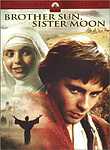
A parishinor at St. Anthony's lent me this movie about the early years of St. Francis' life. According to the Yahoo Movies review, director Franco Zeffirelli attempted to draw parellels between the simple poverty embraced by Francis and his followers and the hippie movement of the 1960's and 70's. I've been assured Zeffirelli didn't turn Francis into a pot-smokin' flag-burnin' rebel... in other words, nothing like this guy.


Okay, I've seen the movie now. It does a good job portraying the abuse Francis suffered under his father, Pietro, as he slowly rejected the world of wealth and comfort in favor of the life of servanthood and preaching the Gospel. Church hierarchy is portrayed in an appropriately corrupt light, nor did it overromanticize the simple life of Francis and his followers. They lived a rough life, subjecting themselves to snowy winters and spring rains with little shelter. While some of the details weren't exactly accurate, that usually happens with movies. I guess they didn't have the technology in 1973 to make the cross of San Damiano move and speak.

There is only one inaccuracy that particularly bothered me. The movie ends with Francis' audience with Pope Innocent III, who blesses the brothers and commissions them to go out and spread the Gospel. Innocent leans over to kiss Francis' hands, then kneels before him and kisses his bare feet. That is all very beautiful and moving, but in the movie two of the cardinals are questioning what's happening before them and one of them confidently remarks, "The Pope knows what he's doing. They will draw the poor back into the Church." The clear implication is that Pope Innocent III wasn't so innocent after all, but merely saw these humble Franciscans as a clever way of drawing the poor into the oppressive influence of "Holy Mother Church."

Well, that little bit creative script writing may have sold more tickets during the early 70's when everyone questioned the authority of any institution and their right to judge right and wrong. Unlike the Reformers, Francis was sincerely concerned about avoiding heresy and this is why he went to Rome to receive the Pope's counsel and seek his blessing. Naturally, Hollywood fails to write a better story than what really happened....

Francis did not have just one audience with a less-than-truthful Pope. The first meeting was rather uneventful, if a group of brothers dressed in rough tunics visiting the Pope can be uneventful. He explained the brotherhood's controversial mission and left. During the night, Innocent dreamed a vision of the Basilica of St. John Lateran leaning on its side and beginning to fall to the ground when a beggar, whom he recognized as St. Francis, came up and supported the whole church on his shoulders. Calling Francis back to the papal court the next day, he didn't talk about his own troublesome dream, but merely listened again to Francis' own dream of literally living out the Gospel. Innocent came down from the papal thrown and embraced Francis.

Innocent gave up bearing a son of his own when he took on Holy Orders; Francis left his earthly father when he proclaimed in the Assisi square "From now on, I desire only to say, 'Our Father, who art in Heaven." In their embrace, Francis gained an earthly father and Innocent gained "many times as [many sons] and eternal life." (Matt. 19:29) And Innocent sent them out, saying "Go with God, little brothers, and announce salvation for all, as the Lord reveals it to you! And when the Almighty has multiplied your number, then come back to me and I will charge you with a greater inheritance."

The real story is that the humble Francis and powerful Pope Innocent III shared a father-son relationship and Innocent was always counted among the Lesser Brothers of Jesus. Together God used them to spiritually rebuild a fragile Church, like Francis had restored stone-by-stone the crumbling San Damiano Church.

28 January 2006

Who is the Richest Man in Assisi?


[Editors note: There was originally a post before this, but in the wisdom of time did not find that one to be all that important or engaging. This was the second post, so I promoted it become the first post since it just makes sense that way. I left a note where the original content of this post begins, which I wanted to save since it I wrote it shortly after first learning about St. Francis' story.]
 
Who is the richest man in Assisi? My blog title is partly an allusion to a parable on financial wisdom by George S. Clason: "The Richest Man in Babylon." I read it years ago in high school, at a time when I devoured just about anything related to personal finance and investing, and even free-lanced a series of articles on the book. Babylon is one of the world's earliest civilizations. They pioneered beer brewing, which I consider as good a benchmark of civilized activity as any. The simple Babylonian economy allows the author to use simple concepts that a layperson can use to better understand today's more complex financial world.

Which brings us to St. Francis, growing up in 12th Century Italy, when international trade, corporate structures, and a rising middle-class were forming the earliest budding seeds of today's modern economy. Francis' father, Pietro Bernadone, was a garment merchant and regarded as the wealthiest man in Assisi. Probably no Medici, to be sure, but up there on the food chain regardless. And since Francis would inherit his father's business and fortune, I call him the "richest man in Assisi."

Of course, not just for that reason -- for if anyone wrestled with God, Francis wrestled. And eventually things came to a head as Francis fell in love with Lady Poverty, coming to view the family business and wealth as pesky mistresses he wanted nothing to do with. In renouncing his natural father's inheritance, he declared, "From now on, I shall only say 'Our Father, who art in heaven,'" embracing his bishop without a stitch of clothes on (imagine that happening today! Assisi apparently didn't have any lawyers :) Thus, Francis exchanged an earthly inheritance for an eternal one, and dying some years later on a cold dirt floor -- naked again, save for a blanket -- it is not Pietro we remember 800 years later, but this man whom thousands of Franciscans emulate around the world, who is often regarded as the most Christ-like of saints, who personally loved his neighbor, whether he find him to be a sickly leper or the Sultan of Egypt.

Many of the issues Francis faced are still relevant today. He is one of the most famous saints, yet one of least known. I regard him as my patron saint, as Francis of Assisi is the Confirmation name I chose on April 15, 2006. And this blog is essentially my thoughts on faith and modern life in light of my esteem for St. Francis.

[Below is the original content of this post, sharing my brief version of Francis' biography when I just learned about him.]

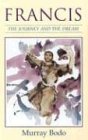
Speaking of books, one of the Franciscans who lives at St. Anthony's gave me a book titled Francis: The Journey and the Dream by Murray Bodo. I guess you'd describe it as a creative account of St. Francis' life. Instead of just telling the facts about his life, it speculates more about his struggles discerning God's will in the face of rejection by relatives and friends. It should make for good meditation.

Having everything he could care for, Francis reveled in the pleasures of life and tended not to be very studious at school. Even those he exhibited sharp business skills, making him the natural candidate to inherit the family business and surely surpass his father in wealth, his dream was to be a knight. He enthusiastically enrolled with an army fighting for Pope Innocent III and was two days into the journey to battle, but God...

A voice in the night instructed Francis to return home and ponder a little more the vision God had given him. No doubt this was frustrating. At some time or another, we have all felt confident of God's will for our lives only to learn that wasn't it at all. But this vision was mysterious if it didn't mean fighting as a knight. In Murray Bodo's description of this vision, Francis "was led into the great hall of a dazzling Palace, where a radiant Princess-Bride held court. The walls were covered with shields and trophies of battles won. And when he asked aloud who the Lord of the castle was, a voice sang out: 'It's the high court of Francis Bernardone and his followers.'" God instructed Francis to abandon the military and return home, where he would be told what to do.

While Francis continued to party with his old friends, God had drawn his heart to a higher calling. While riding on horseback one day, he suddenly came upon a repulsive leper. At first, he retreated in disgust, but he couldn't pass him by. Instead, he dismounted the house and embraced the leper, then gave him all his money. Surely, failing to embrace this poor leper would have been a failure to embrace Christ himself. Indeed, it was in the crumbling chapel of St. Damien that Francis heard Christ speak from the cross, commanding him, "Go, rebuild my church, which you can see has fallen into ruins."

In his saintly zeal, Francis started the work of rebuilding this chapel. It was literally falling apart, after all. He immediately went and sold some of his father's inventory of cloth and one of his horses to raise money for the church. Naturally, his father was angry, and Francis escaped to a cave for a month to avoid him. Upon returning to the city, a crowd pelted Francis with mud and stones, mocking him as a madman. Pietro forced him home, beat him, and locked him bounded in a dark closet.

While the gold was recovered since the priest at St. Damien refused to accept it, Pietro also wanted Francis to forgoe his inheritence. Brought before the bishop, Francis -- who was once destined in the world's eyes to inherit all the wealth Assisi could offer -- stripped himself of his clothes and handed them to this father, declaring, "I have called you my father on earth. From now on, I desire to say only 'Our Father, who art in heaven."

Francis continued working on the restoration of St. Damien's and two abandoned chapels near Assisi, begging for stones and personally putting them in place, while also caring for the lepers. Apparently he didn't leave much room for interpretation when God's Word seemed to speak directly to him. After hearing the Gospel message of Jesus instructing the disciples to carry no gold or silver, shoes, nor a staff for the journey, but to go out preaching repentance and announcing the Kingdom of God, Francis rid himself of what little he still owned. Now he wore merely a coarse, brown tunic tied around him with a knotted rope -- the clothing of the poorest peasants. Out in the countryside, he preached penance, brotherly love, and peace. Francis soon began attracting followers who shed everything they owned to take up a life of service and preaching the Gospel.

This movement, eventually developing into the Franciscan Order, did rebuild the Church -- not so much physically, but spiritually. In the midst of widespread corruption within the Church hierarchy, God used Francis to inspire Christians to lives of sacrificial love for God and neighbor. And that mysterious vision of shields and trophies wasn't for earthly battles won as a knight, but for the thousands of souls delivered from darkness by Francis and his followers.

In addition to the ordes, he was an active missionary travelling even as far as personally visiting the Sultan of Egypt during the midst of the Crusades. Francis also started the tradition of building Nativity scenes and was the first person to receive the stigmata. He died naked on the bare ground of a hut, covered only by a borrowed cloth, but had gained the favor of God and even the same citizens of Assisi who once stoned him as a madman. Therefore, I call him the richest man in Assisi.